
Historic Hotels & Country Inns: Why Standard Insurance Fails
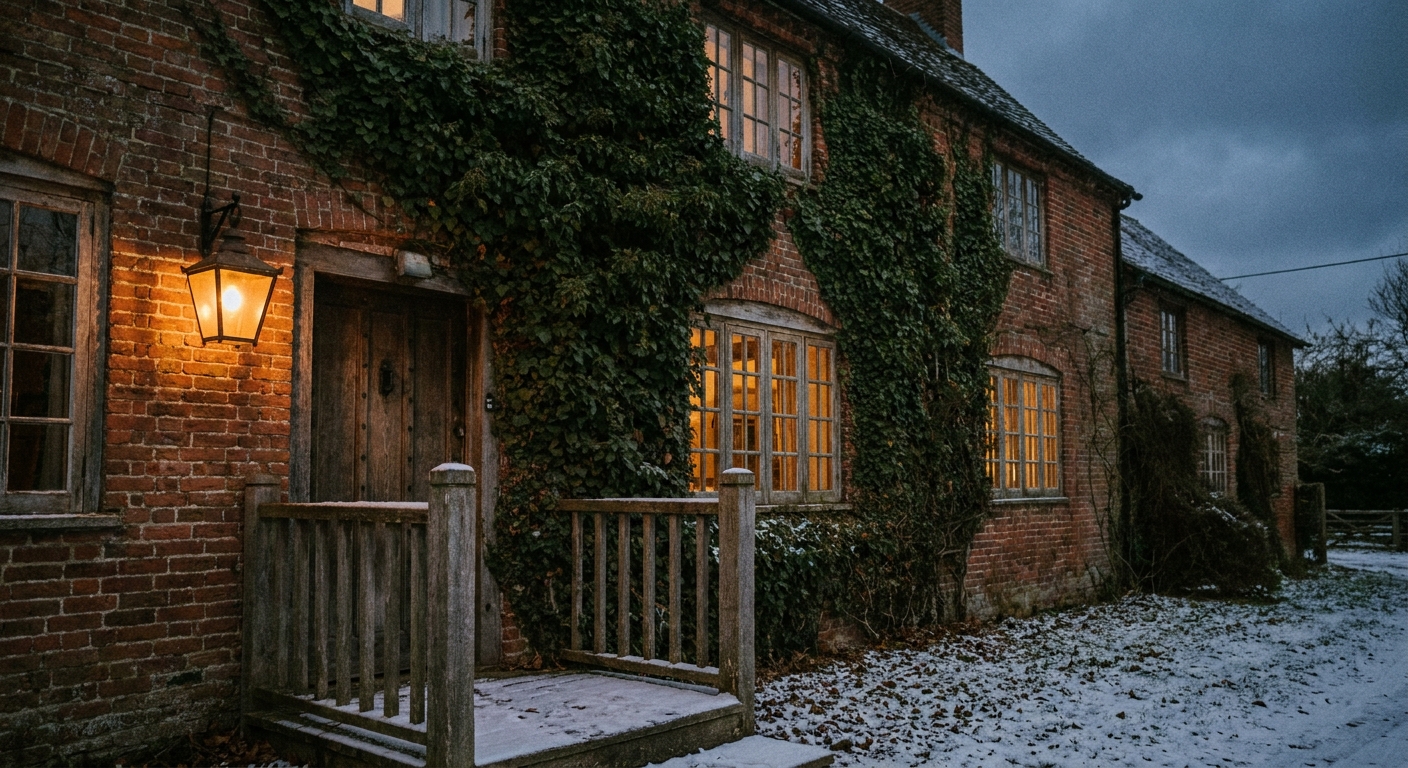
If you operate a historic hotel, country inn, or pre-WWII boutique property, standard insurance markets will almost certainly reject your account — and even when they accept it, the policy you receive may carry a coverage gap that wrecks the claim when something serious happens. Replacement cost on a 1910 inn with hand-hewn beams, knob-and-tube wiring, and lath-and-plaster walls doesn't behave like replacement cost on a 2015 Holiday Inn Express. The right markets — AmWins Program Underwriters and Normandy Insurance — write valuation forms that solve this problem.
Why Do Standard Insurance Markets Reject Historic Hotels?
Standard insurance markets reject historic hotels and country inns because their underwriting models are built for buildings under 25 years old with modern construction, sprinklered fire protection, and predictable replacement cost. Historic hospitality properties violate almost every assumption in that model — and a property risk that doesn't fit the model is a property risk a standard carrier won't price.
The typical rejection points are:
- Building age beyond carrier appetite — most standard markets cap building age at 25 to 50 years, especially if there have been no documented major renovations.
- Knob-and-tube or cloth-wrapped wiring — pre-1950 electrical systems that haven't been fully replaced are an automatic decline at most preferred markets.
- Lath-and-plaster walls and balloon-frame construction — older wall and framing systems behave differently in a fire and dramatically increase reconstruction cost.
- Fire suppression challenges — historic buildings often can't be retrofitted with full sprinkler systems without destroying the very features that make them historic.
- Period-correct restoration premiums — replacing a custom-milled crown molding or a hand-cut slate roof costs 3x to 10x its modern equivalent.
- Fine-dining liquor exposure — country inns with destination restaurants often serve more alcohol per guest than standard hotels, pushing them out of typical hotel BOP appetite.
When a property has any combination of these characteristics, the account belongs in specialty E&S markets — not on a standard ISO BOP form.
What Is the Difference Between Replacement Cost, Functional Replacement, and Historic Valuation?
Replacement cost pays to rebuild your property with materials and methods "of like kind and quality" to the original. Functional replacement pays to restore the building to functional use with modern materials. Historic valuation — a specialty form available in select hospitality programs — pays to rebuild using period-correct materials and trade craftsmanship that preserve the historic character of the property.
The distinction matters because a country inn isn't a commodity building — its value to guests, its room rate, and its competitive moat all derive from being authentically old. Functional replacement (cheaper and easier to obtain) would let an insurer rebuild your 1880 Federal-style inn as a vinyl-sided pole barn that has "the same function." Replacement cost on a standard form would pay only the lower of the actual repair cost or the policy limit. Historic valuation specifically commits the carrier to the higher cost of period-correct construction — assuming you've insured to the right value.
| Valuation Form | What It Pays | Best For |
|---|---|---|
| Replacement Cost (standard) | Like-kind materials at modern construction costs | Hotels built post-1980 with conventional construction |
| Functional Replacement | Rebuild to functional use with modern materials | Older buildings owner accepts may not be rebuilt in original style |
| Historic Hotel Building Valuation | Period-correct materials, craftsmanship, and finishes | Pre-1940 hotels and inns preserving historic character |
| Actual Cash Value (ACV) | Depreciated value at time of loss | Avoid for any operating hotel — recovery is painful |
What Is the ITV Gap and Why Does It Wreck Historic Hotel Claims?
The Insurance-to-Value (ITV) gap is the difference between the building limit on your policy and what it would actually cost to rebuild the property after a total loss. When that gap is large — and on historic hotels it usually is — the carrier applies a coinsurance penalty that reduces every claim payment, even on small partial losses. ITV gap is the leading reason historic hotel and country inn claims under-pay.
How the Coinsurance Math Works
A typical commercial property policy carries an 80% or 90% coinsurance clause. If your country inn would actually cost $5,000,000 to rebuild period-correct, your policy requires a building limit of at least $4,000,000 (at 80% coinsurance) or $4,500,000 (at 90%). If you've insured it for only $3,000,000 — because the prior agent took a tax-assessed value or a quick replacement-cost estimator output — every claim is reduced by the ratio of actual coverage to required coverage.
Example: a $200,000 kitchen fire claim on an inn insured at $3M when $4M was required pays only $150,000 ($3M / $4M × $200K). The owner eats the $50,000 difference even though they never had a total loss.
Why Standard Valuation Tools Miss the Mark
Marshall & Swift, MSB, and most replacement-cost estimators are calibrated to modern construction — drywall, lumber, modern HVAC. None of them adequately price hand-milled trim, custom slate roofing, restored hardwood floors, fully replicated period plumbing fixtures, or licensed historic-preservation trade labor. The result is an estimator output that's often 30% to 50% below the true reconstruction cost on a historic property.
The Right Way to Establish ITV
For a historic hotel or country inn, ITV should be established by a hospitality-experienced appraiser or contractor who has actually rebuilt period-correct property — not a desktop estimator. Many AmWins and Normandy submissions include a third-party reconstruction cost analysis as part of the underwriting package. The cost of a proper appraisal — typically $2,500 to $7,500 — is trivial compared to the coinsurance haircut a poorly valued policy will deliver after a loss.
What Does Historic Hotel Building Valuation Cover in the AmWins Program?
Historic Hotel Building Valuation is a specialty endorsement included in the AmWins Program Underwriters Destination Resorts & Hotels program. It commits the carrier to pay reconstruction cost using period-correct materials, craftsmanship, and licensed trade labor — recognizing that a true historic property cannot simply be rebuilt with off-the-shelf modern materials.
AmWins Program Underwriters (APU) Best for Historic
AmWins Program Underwriters operates the Destination Resorts & Hotels program on A.M. Best A-rated carrier paper. The program explicitly accepts older hotels built 1930+ with appropriate renovations and includes Historic Hotel Building Valuation as a core coverage. Country inns with fine dining are listed as a target class. The minimum account premium is $25,000 and the program is available in all U.S. states except Hawaii.
Normandy Insurance Property & LRO
Normandy Insurance is the right secondary market for historic hotel property and Lessor's Risk Only (LRO) accounts when the operation doesn't meet APU's $25K minimum or when a property-only quote is needed. Normandy supports TIV of $3M per building / $5M per policy with $1M/$2M LRO and excess liability up to $5M. They're admitted and non-admitted in Connecticut and work well as a sister-line placement when APU writes the GL and umbrella.
Joseph Krar & Associates
Joseph Krar & Associates is our CT-based wholesale partner with access to six E&S GL carriers that have hotel and inn appetite — including Nautilus, IFG, Crum & Forster, Great American, MESA, and Atlantic Casualty. For a small country inn that doesn't qualify for the AmWins program, JK's APEX comparative rating engine lets us shop the GL across all six markets quickly and find the right home for the account.
Why Are Knob-and-Tube Wiring and Lath-and-Plaster Walls Such a Problem?
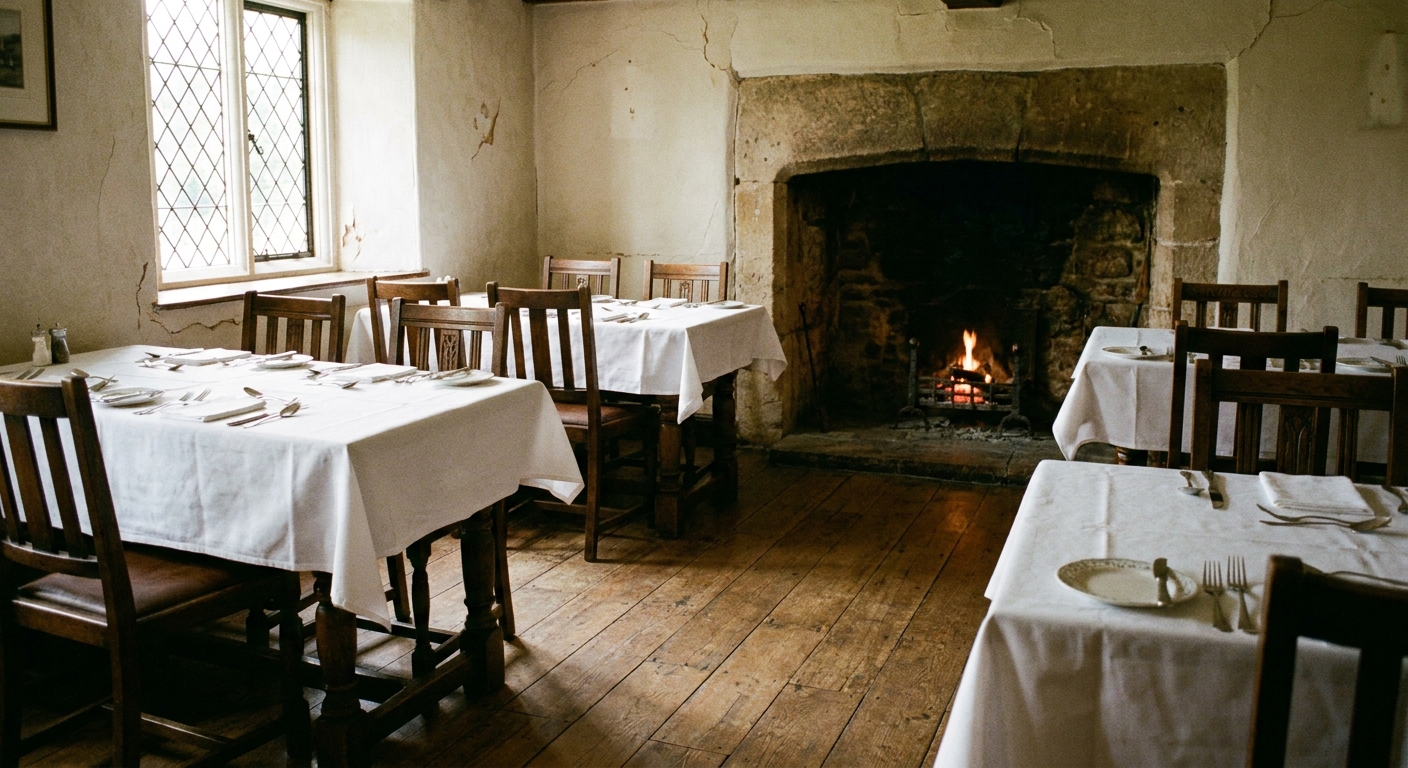
Knob-and-tube wiring and lath-and-plaster walls are dealbreakers for standard markets because both increase fire risk and reconstruction cost simultaneously — exactly the combination an underwriter is trained to avoid. They're also the two construction features owners most often misrepresent on applications, deliberately or accidentally.
Knob-and-Tube and Pre-1950 Electrical
Knob-and-tube (K&T) wiring was standard from roughly 1880 to 1940. It's not inherently dangerous in undisturbed condition, but in a hotel environment — with insulation packed around the wires, modern higher-amp loads, and decades of amateur repairs — it becomes a meaningful fire risk. Standard carriers either decline accounts with active K&T, charge surcharged rates, or require full electrical replacement before binding. Specialty markets like AmWins will write a property with documented partial K&T if the owner has a remediation plan and disclosed it up front.
Lath-and-Plaster and Reconstruction Cost
Lath-and-plaster walls (wood strips covered in three coats of plaster) are denser, heavier, and far more expensive to reconstruct than modern drywall. After a loss, restoring lath-and-plaster requires plasterers — a specialty trade that costs 3x to 5x what a drywall crew costs and runs 2-3 months longer per job. That cost differential is exactly what Historic Hotel Building Valuation is meant to address.
How Does Fine-Dining Liquor Exposure Affect a Country Inn's Insurance?
Country inns with destination restaurants generate dram-shop and host-liquor liability exposure that often exceeds the limits standard hotel BOP forms are designed to cover. A country inn that serves wine pairings with a tasting menu, hosts weddings, or operates a destination bar can run liquor sales as a meaningful percentage of total revenue — putting the inn squarely into specialty market appetite.
USLI (Berkshire Hathaway) and Joseph Krar's E&S panel are the right markets for inn liquor liability. Typical limits start at $1M per occurrence with higher capacity available through layered programs. Country inns with fine dining are also a listed target class for AmWins, which can write the package — including liquor — under a single account.
What Does a Country Inn Insurance Submission Look Like?
A complete country inn insurance submission has more documentation than a typical hotel package because the underwriter needs to evaluate building age, restoration history, fire suppression, and liquor exposure in detail. Plan to spend a few hours on the underwriting package — the better the documentation, the better the terms.
Building history and renovation log. Year built, any major renovations, year of last electrical upgrade, plumbing, roof, HVAC replacement, sprinkler installation. Date each event and document the scope.
Third-party reconstruction cost analysis. Engage a hospitality-experienced appraiser or contractor to produce a period-correct replacement cost report. This is the single most important document in the submission — it sets ITV correctly.
Fire suppression and life safety inventory. Full or partial sprinkler coverage, kitchen Ansul, fire-rated egress doors, fire-alarm monitoring, smoke detector count, fire extinguisher placement, and inspection records.
Liquor and food service supplemental. Liquor sales as a percentage of total revenue, hours of alcohol service, server training (TIPS or equivalent), and any prior dram-shop claims.
5-year loss runs and ACORD applications. Currently valued loss runs with details on any claim over $10,000, plus ACORD 125, 140, and 131. AmWins also requires the Resort Comprehensive Profile for destination properties.
Country Inn Case Study: How a Properly Structured Program Pays Off
A real-world example of why specialty placement matters: a 14-room New England country inn built in 1895, operating a 60-seat fine-dining restaurant and small wedding venue, was insured for years on a standard BOP at $2.1M building limit with standard replacement cost valuation. The owner came to us at renewal after a small kitchen fire — a $90,000 partial loss — that paid only $61,000 because of a coinsurance shortfall.
What We Found
- A current third-party reconstruction analysis put true period-correct replacement cost at $3.8M — 80% more than the policy limit.
- The standard BOP carried no Historic Hotel Building Valuation endorsement; reconstruction would have proceeded as functional replacement.
- Liquor liability was capped at $1M with no aggregate, despite annual liquor sales running 18% of revenue.
- No separate Lessor's Risk coverage for the two cottages rented to long-term seasonal tenants.
What We Placed
We rebuilt the program in the AmWins Destination Resorts & Hotels program — $3.8M building limit with Historic Hotel Building Valuation, $1M/$2M GL, $1M dedicated liquor liability layered with a $2M Normandy excess, full inland marine on the wine cellar, and a proper Lessor's Risk endorsement for the cottages. Total premium increased about 22%, but the next claim — whenever it comes — pays without a coinsurance haircut, and reconstruction is committed to period-correct trades.
Which Markets Are the Right Home for a Historic Hotel?
The right market for a historic hotel depends on size, restaurant operations, liquor mix, and location. AmWins is the gold standard for destination properties with $25K+ in premium. Normandy fits smaller TIV property-only placements. Joseph Krar's E&S panel handles GL when premium is below APU's minimum. Berkshire Hathaway GUARD covers the WC and shuttle auto on accounts written elsewhere.
| Property Profile | Recommended Market |
|---|---|
| Historic destination resort, $5M+ TIV, $25K+ premium | AmWins Destination Resorts & Hotels |
| Country inn with fine dining, mid-size | AmWins or AmWins + Normandy excess |
| Small historic B&B, sub-$3M TIV | Normandy property + JK Associates GL |
| Older motel or roadside lodging | Joseph Krar E&S panel |
| WC and shuttle auto on any of the above | Berkshire Hathaway GUARD |
Key Takeaways
- Standard insurance markets reject historic hotels because of building age, knob-and-tube wiring, lath-and-plaster construction, fire suppression challenges, and period-correct restoration costs that fall outside typical underwriting models.
- The Insurance-to-Value (ITV) gap is the single biggest reason historic hotel claims under-pay — coinsurance penalties reduce every claim, not just total losses.
- Historic Hotel Building Valuation, included in the AmWins Destination Resorts program, commits the carrier to pay reconstruction cost using period-correct materials and craftsmanship.
- Older hotels built 1930 and later are acceptable in the APU program with appropriate renovations; country inns with fine dining are a listed target class.
- Normandy Insurance and Joseph Krar's E&S panel cover smaller historic accounts that don't meet APU's $25K minimum.
- Always establish ITV with a third-party hospitality-experienced reconstruction cost analysis — desktop estimators undervalue period-correct construction by 30% to 50%.
Frequently Asked Questions
Can I insure a hotel built before 1930?
Yes, but expect specialty placement. The AmWins Destination Resorts program explicitly accepts older hotels built 1930+, and pre-1930 properties can be placed through the same program on a case-by-case basis when restoration history, fire suppression, and electrical upgrades support it. Older properties that don't meet APU criteria can often be placed through Normandy, USLI, or Joseph Krar's E&S panel of six hotel-friendly GL carriers.
What is Historic Hotel Building Valuation and how do I get it?
Historic Hotel Building Valuation is a property coverage form, included in the AmWins Program Underwriters Destination Resorts & Hotels program, that commits the carrier to pay reconstruction cost using period-correct materials, craftsmanship, and licensed trade labor. To qualify, the property must meet APU's underwriting standards (built 1930+, documented renovations, fire suppression in place) and the policy must be placed through APU. The endorsement is not available on standard ISO BOP forms.
Does my historic hotel need full sprinkler coverage?
Many specialty markets prefer full sprinkler coverage but will accept partial sprinkler coverage in historic buildings where full retrofit would damage the property's historic character. Properties without sprinklers typically need to demonstrate compensating controls — monitored fire alarm, kitchen Ansul, fire-rated egress doors, smoke detector network, and documented evacuation plan. Premium will be higher than a fully sprinklered property, but the placement is still doable through specialty markets.
Is knob-and-tube wiring an automatic decline?
At standard markets, yes. At specialty markets like AmWins, partial active knob-and-tube can be accepted when the owner discloses it up front, documents the scope (which circuits and rooms are still on K&T), and presents a remediation plan with a defined timeline. Properties that have fully replaced K&T with modern wiring should provide an electrician's certification of the replacement scope — this dramatically improves terms.
How do I figure out the real replacement cost of my country inn?
Engage a third-party hospitality reconstruction cost appraiser or a contractor with documented historic-restoration experience. Desktop replacement-cost estimators (Marshall & Swift, MSB, Boeckh) are calibrated to modern construction and routinely undervalue period-correct rebuilds by 30% to 50%. The cost of a proper appraisal — typically $2,500 to $7,500 — is small compared to the coinsurance haircut a poorly valued policy delivers at claim time.
Can I insure a bed-and-breakfast through the AmWins program?
B&Bs are not the typical target class for AmWins Destination Resorts — the program is built for $25K+ premium accounts with destination resort characteristics. Most B&Bs are placed through Normandy Insurance for property, USLI or one of Joseph Krar's E&S markets for GL, and Berkshire Hathaway GUARD for WC. The carrier mix is different, but the result is a coordinated hospitality program tailored to the smaller premium size.
What's the minimum premium to access the AmWins Destination Resorts program?
The AmWins Program Underwriters Destination Resorts & Hotels program has a minimum account premium of $25,000. Accounts that don't meet that threshold are typically placed through Normandy, USLI, Joseph Krar's E&S panel, or Berkshire Hathaway GUARD depending on the coverage line. We assess each account at submission and recommend the right market mix rather than forcing a small inn into a program designed for larger destination resorts.
Historic hotels and country inns deserve insurance designed for the way they're built — not the way a 1990s ISO BOP form imagined hotels would be built. If you operate a historic property in Connecticut or elsewhere and want a broker who understands ITV, knob-and-tube, lath-and-plaster, and the difference between functional replacement and historic valuation, our team specializes in placements through AmWins, Normandy, Berkshire Hathaway GUARD, and the right E&S markets for your size. Learn more about our Hotels & Destination Resorts Insurance program, or request a quote for your property today. Prefer to talk first? Call us at (860) 970-0977.
Contenido relacionado
AI Payment Fraud Incident Response: What to Do First
The first hour after a fraudulent wire can decide whether funds are frozen or lost. Follow this practical response guide for banks, insurers, evidence, law enforcement, and recovery.
Leer artículo →
Hotel and Commercial Property Insurance: Where Should Renewal Savings Go?
A practical guide for hotel and commercial-property owners deciding whether to keep renewal savings, lower deductibles, increase limits or restore coverage.
Leer artículo →AI Fraud Insurance Exclusions: Where Coverage Can Break
A large cyber limit can hide a small social engineering sublimit. Learn how voluntary-transfer language, verification conditions, and overlapping crime coverage can affect AI fraud claims.
Leer artículo →
Connecticut Builders Risk Insurance: 2026 Buyer’s Guide
Connecticut builders risk buyers should update project values, timelines and controls. Learn what to prepare and compare for a 2026 placement.
Leer artículo →