
Coastal & Beachfront Resort Insurance: Wind, Flood & Storm
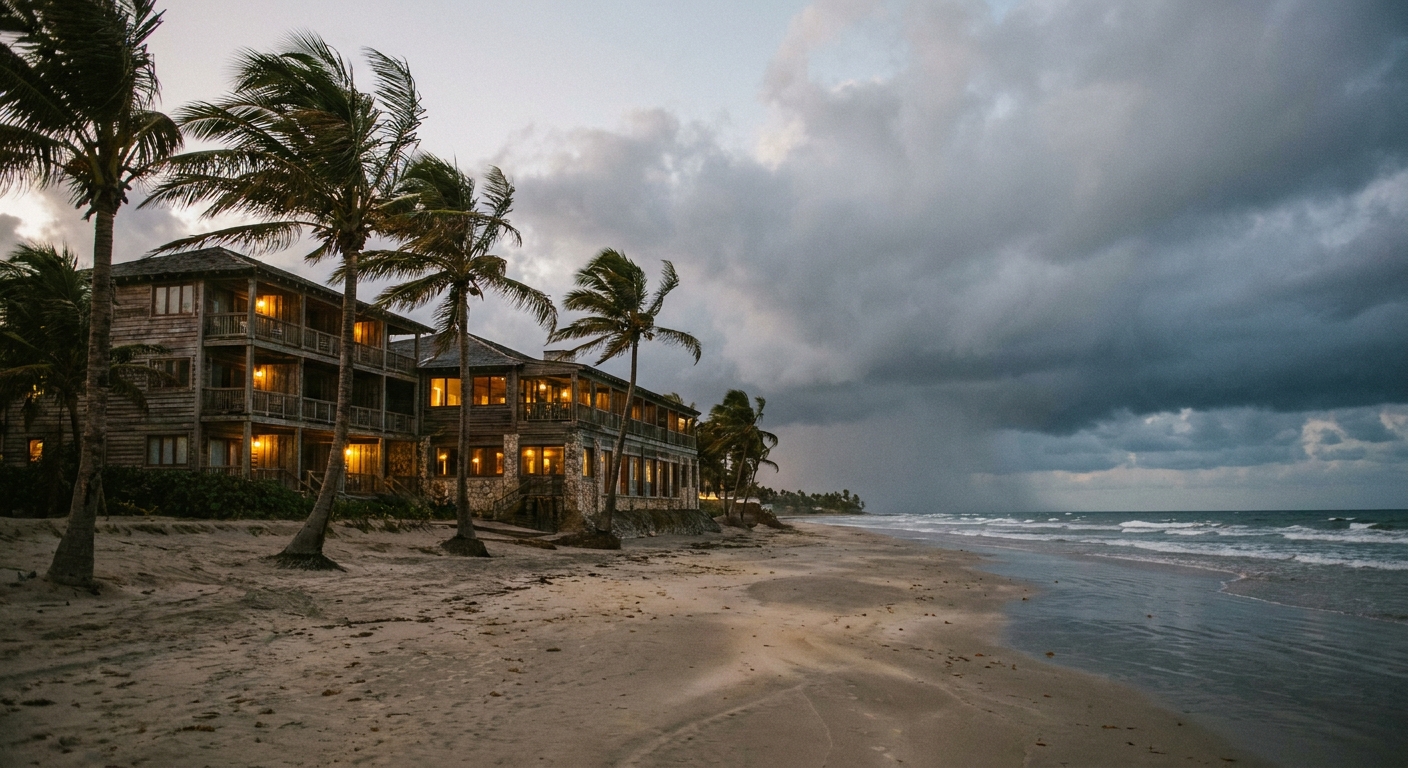
Coastal resort insurance is its own underwriting category. Wind, named storms, and storm surge are excluded — or sublimited — under most standard hotel property policies. To protect a beachfront hotel properly, you need three coordinated layers: a wind/named-storm policy, flood coverage (NFIP or private), and business interruption tied to evacuation orders. This guide walks through what's covered, what's excluded, and which specialty markets actually write these risks.
Why Is Coastal Resort Insurance Different From Regular Hotel Insurance?
Coastal resort insurance is different because the exposures — wind, named storm, storm surge, and flood — are either excluded, sublimited, or written on entirely separate policies than the property coverage on a standard hotel package. A boutique hotel in downtown Hartford and a beachfront resort in the Outer Banks may look similar on paper, but the underwriting math is nothing alike. Coastal carriers price for tail risk: a single Category 3 hurricane can total an oceanfront property's roof, glazing, mechanicals, and ground-floor build-out in a few hours.
Standard hospitality programs from Chubb, Berkshire Hathaway GUARD, and admitted middle-market carriers will often quote a coastal resort — but they typically exclude wind, name-storm, or place a low sublimit on the windstorm peril. The hotel owner is then responsible for sourcing wind and flood coverage from a specialty Excess & Surplus (E&S) market. Our hotels and destination resorts insurance program coordinates all three layers so there are no gaps between the policies.
What Do Standard Hotel Property Policies Actually Exclude on the Coast?
Standard hotel property policies typically exclude or sublimit four perils on coastal properties: named windstorm, storm surge, flood, and earth movement. Reading the form carefully matters — most coastal claim disputes hinge on how each peril is defined and whether the loss is attributed to wind (covered, sometimes) or water (excluded, usually).
Named Windstorm Exclusion
A "named windstorm" is any storm given a name by the National Hurricane Center — hurricanes and tropical storms — and it triggers a separate deductible (or full exclusion) on most coastal property policies. The exclusion language is often written as a per-peril rider tied to specific Tier 1 ZIP codes within a defined distance of saltwater.
Storm Surge & Wind-Driven Water
This is where claims get litigated. Insurers will typically argue that water damage from rising surge — even when the surge is driven inland by hurricane winds — is flood, not wind. Without separate flood coverage in place, that ground-floor lobby, the elevator pits, and the ductwork in the basement are uninsured.
Business Interruption from Evacuation Orders
Civil authority and ingress/egress coverage on a standard policy generally requires direct physical damage to nearby property to trigger BI payments during an evacuation. If a county evacuates your resort before any damage occurs, a basic BI form may not respond. Coastal-aware forms include "Mandatory Evacuation" or "Order of Civil Authority" extensions that trigger on the order itself.
What Are the Three Layers of Coastal Resort Insurance?
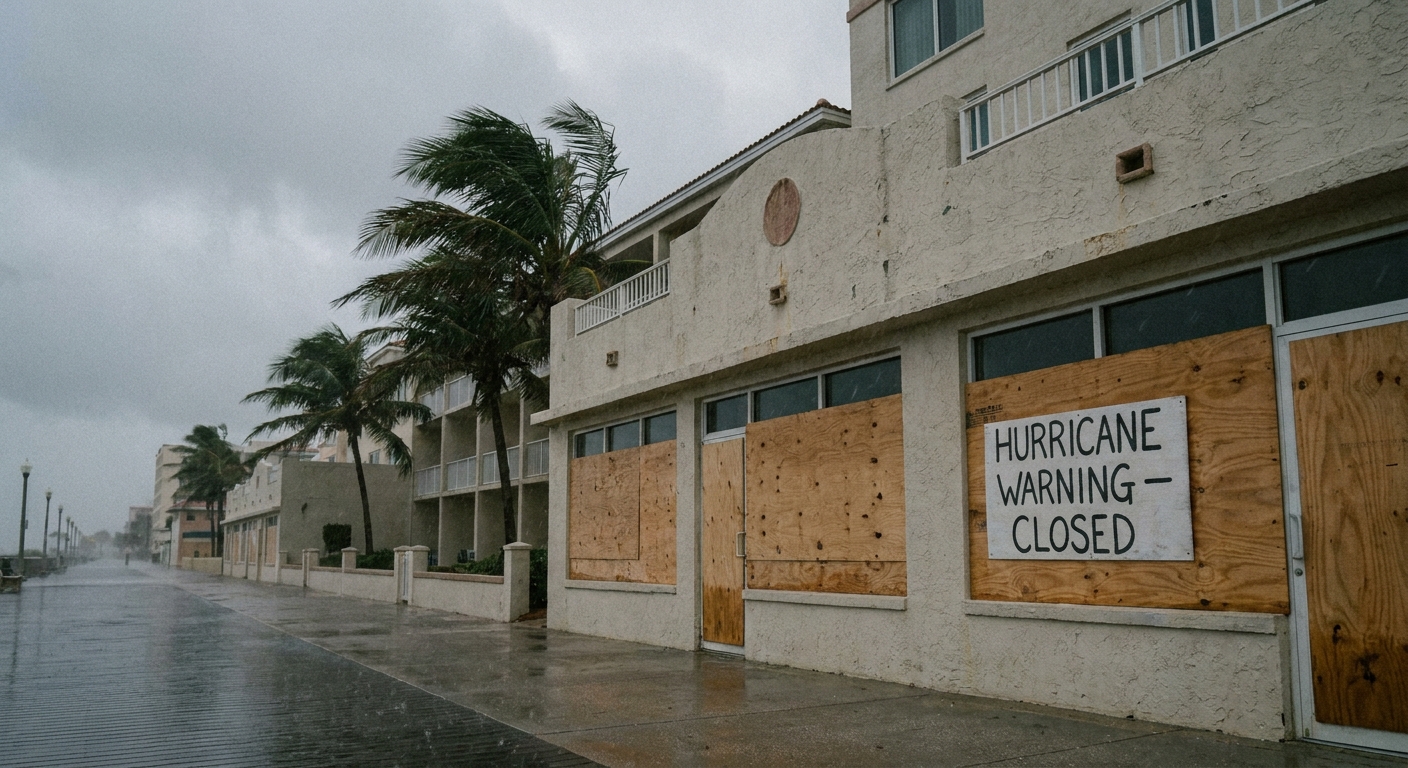
Coastal resort insurance is built on three coordinated layers: a wind-only or named-storm property policy, flood insurance (NFIP or private), and business interruption tied to evacuation orders. Each layer is typically written by a different specialty carrier, and each has its own deductible structure, sublimits, and exclusions to align.
Layer 1: Wind / Named Storm
A wind-only or "ex-wind" structure pulls the windstorm peril out of the all-risk property form and places it with a specialty carrier. The advantage is that you can buy more wind capacity (some E&S markets will write up to $50M+ in wind TIV) without forcing the rest of your property carrier to underwrite a peril they'd rather avoid. The trade-off is two policies, two underwriters, two claim adjusters.
Layer 2: Flood Coverage
For commercial flood, the National Flood Insurance Program (NFIP) caps coverage at $500,000 per building and $500,000 in contents. For a $10M oceanfront resort, that's nowhere close to enough. Excess private flood is layered above the NFIP base — or in some cases, the resort skips NFIP entirely and buys a stand-alone private flood policy from carriers like Wright Flood (private side), Lloyd's syndicates, or specialty MGAs that participate in the FloodFlash and Neptune programs.
Layer 3: Business Interruption
A coastal-aware BI form should include: extended period of indemnity (12–24 months), order of civil authority for mandatory evacuations (without a direct-damage trigger requirement), ingress/egress, dependent property coverage if your guests can't reach you because the bridge or causeway is closed, and reasonable contingent business income for cruise-line or airline-driven occupancy disruption. Match the BI indemnity period to your true reconstruction timeline — coastal projects routinely run 18–30 months after a major storm because of contractor scarcity.
How Do Wind Deductibles Work on a Coastal Resort?
Wind deductibles on coastal property policies are usually written as a percentage of Total Insured Value (TIV), not a flat dollar amount. A typical named-storm deductible is 2% to 5% of TIV, applied per location, per occurrence. Hotel owners who haven't run the math are routinely surprised by the size of their first hurricane claim retention.
Percentage Deductible Math
Take a beachfront hotel with a TIV of $12 million. A 5% named-storm deductible is $600,000 — the hotel owner's first dollar out of pocket before any insurance recovery. A 2% deductible on the same property is still $240,000. Compare that to the flat $25,000 deductible most owners are used to seeing on their all-risk form, and you can see why coastal owners need to plan cash reserves accordingly.
Per Occurrence vs. Annual Aggregate
Most named-storm deductibles apply per occurrence, meaning two hurricanes in one season trigger two deductibles. A few carriers offer annual aggregate caps for an additional premium — a worthwhile conversation for properties in high-frequency zones like the Florida panhandle or Gulf Coast.
Minimum Dollar Wind Deductibles
Some E&S markets — including Green Shield Risk Solutions — apply a minimum percentage wind deductible (1% or higher) rather than a flat dollar floor. This means even small claims that would normally fall under a $25,000 AOP deductible can trigger the larger percentage retention if wind is the cause of loss.
Which Specialty Carriers Write Coastal Hotel Coverage?
Three specialty markets we work with daily on coastal hospitality risks:
Green Shield Risk Solutions Wind Specialist
Green Shield is a wind-only specialist with a dedicated Coastal Package Program. They write wind-only Total Insured Value up to $3 million per location, with a 1% minimum windstorm deductible. They're nationwide non-admitted (E&S) and pair well with an admitted all-risk policy from another carrier. Hospitality general liability is also available at $2M/$4M limits — useful when you need a single carrier on the coastal package side.
AmWins Program Underwriters Target Class
AmWins lists coastal resorts as a target class within their Destination Resorts & Hotels program. Coverage includes hospitality and leisure enhancements, flood and earthquake, equipment breakdown, and named-storm provisions on A.M. Best A-rated paper. The minimum account premium is $25,000 and the program is available in all 50 states except Hawaii. For a deeper dive, see our companion guide on the AmWins Destination Resorts Program.
Normandy Insurance
Normandy writes property up to $3 million per building and $5 million per policy, with Lessor's Risk Only (LRO) limits of $1M/$2M and excess liability up to $5 million. They're admitted and non-admitted in Connecticut, which gives Northeast coastal owners — Long Island Sound, Cape Cod, the Jersey Shore — an admitted-paper option for moderate-TIV properties.
How Do NFIP and Private Flood Compare for Coastal Hotels?
NFIP caps commercial flood coverage at $500,000 per building and $500,000 in contents, while private flood markets can write tens of millions of dollars in capacity with broader coverage terms. For most destination resorts, NFIP is a starting layer that must be paired with excess private flood — not a complete solution.
| Feature | NFIP (Commercial) | Private Flood |
|---|---|---|
| Maximum Building Limit | $500,000 | $25M+ available |
| Maximum Contents Limit | $500,000 | Up to building limit |
| Business Interruption | Not included | Available as endorsement |
| Replacement Cost | Generally ACV on commercial | Replacement Cost available |
| Waiting Period | 30 days | Typically 10–14 days |
| Flood Zone Restrictions | All zones | Varies by carrier |
What Hurricane Preparedness Credits Can Coastal Hotels Earn?
Most coastal underwriters offer premium credits — typically 5% to 25% — for documented hurricane preparedness measures. These credits can offset thousands of dollars on a high-TIV resort policy and signal to the underwriter that this is a well-managed risk.
Common credit-eligible improvements include:
- Impact-rated windows and doors meeting Florida Building Code (FBC) or Miami-Dade approval standards.
- Roof tie-downs and hurricane straps on framing members, especially on properties built before modern code.
- Secondary water resistance on the roof deck (sealed seams beneath the primary covering).
- Documented written hurricane plan covering shutter installation, guest evacuation, vendor contacts, and post-storm reopening.
- Generator and elevated mechanicals — moving electrical service and HVAC above predicted surge elevation.
- Annual third-party wind mitigation inspection with current report on file.
How Does Business Interruption Work With Mandatory Evacuations?
Business interruption for mandatory evacuations is only triggered if your policy includes a specific Order of Civil Authority extension that doesn't require physical damage as a precondition. Standard BI forms require direct physical loss; a county-wide evacuation alone doesn't qualify unless the form is expressly written to respond.
Order of Civil Authority Coverage
Look for "Order of Civil Authority" or "Mandatory Evacuation" wording with no direct-damage trigger. Best forms pay for lost revenue for a defined period — typically 30 to 60 days — when a governmental authority orders the hotel closed or guests evacuated. This is essential because most coastal hotels lose more revenue in the pre-storm evacuation window than they do from physical damage itself.
Ingress/Egress Coverage
Separate from civil authority, ingress/egress coverage pays when access to the hotel is physically prevented — bridge out, causeway flooded, roads closed for debris clearance — even if your hotel itself is undamaged. For barrier-island and peninsula resorts, this can be the single most valuable BI extension.
Period of Restoration vs. Period of Indemnity
Coastal reconstruction is slow. Contractors are scarce, materials are scarce, permits are slow. Your period of restoration (how long it physically takes to rebuild) is rarely the same as your period of indemnity (how long the policy will pay you). Push for 18- to 24-month indemnity periods minimum.
What Underwriting Information Do Coastal Carriers Want?
Coastal resort submissions are more detailed than inland hotel submissions. Expect to provide:
Distance to saltwater. Measured to the nearest tidal body — Gulf, Atlantic, Sound, bay. Tier 1 carriers usually draw the line at 1 mile, 2 miles, or 5 miles depending on their wind appetite.
FEMA flood zone designation. Provide the Flood Insurance Rate Map (FIRM) panel and Base Flood Elevation (BFE). Properties in V zones and AE zones are priced differently.
Wind mitigation report. Typically a one-page form documenting roof shape, roof-to-wall attachment, opening protection, and secondary water resistance.
Construction details. ISO construction class, year built, year of last major roof replacement, year of last major mechanical replacement.
Five years of loss runs. Currently valued, including all wind, flood, and water claims regardless of dollar amount.
Written hurricane preparedness plan. Most coastal carriers now require this as a condition of binding — and use it for credit eligibility.
When Should a Coastal Hotel Owner Start the Renewal Process?
Coastal resort renewals should start 90 to 120 days before expiration — earlier than the typical 60–90 day window for inland hospitality risks. Wind capacity is finite, and during the run-up to hurricane season (June through November), underwriters tighten their books. Submissions that arrive in May for a July 1 renewal often see fewer markets responding and worse terms.
If your policy renews between June 1 and November 30 (the official Atlantic hurricane season), expect "named-storm binding suspension" clauses. Most coastal markets will not bind new wind coverage while a named storm is within a defined radius — often 1,000 nautical miles. Plan ahead.
Key Takeaways
- Standard hotel property policies exclude or sublimit named windstorm, storm surge, and flood on coastal properties — coverage has to be layered.
- Three coordinated layers are required: wind/named-storm, flood (NFIP plus excess private), and BI tied to mandatory evacuation orders.
- Wind deductibles are percentages of TIV (typically 2–5%), not flat dollars — a $12M resort with a 5% deductible has a $600,000 retention.
- Specialty markets to know: Green Shield Risk Solutions (wind-only to $3M TIV, 1% min deductible), AmWins Program Underwriters (coastal target class), and Normandy Insurance (CT-admitted property + LRO).
- NFIP commercial flood caps at $500K building / $500K contents — private flood is required for anything above that.
- Hurricane preparedness credits can knock 5–25% off the wind premium with documented mitigation and a written plan.
- Start coastal renewals 90–120 days out — wind capacity tightens dramatically during hurricane season.
Frequently Asked Questions About Coastal Resort Insurance
What is named storm coverage on a hotel insurance policy?
Named storm coverage is property insurance that responds to losses caused by any storm named by the National Hurricane Center — hurricanes, tropical storms, and tropical depressions. On coastal hotel policies, named storm is usually carved out from the main property form with its own percentage-of-TIV deductible (commonly 2% to 5%) and is written by specialty wind markets such as Green Shield Risk Solutions or AmWins Program Underwriters.
How much does coastal resort insurance cost compared to inland hotels?
Coastal resort insurance typically costs 2x to 5x more than equivalent inland hotel coverage on a rate-per-$100-of-TIV basis. A $10M-TIV inland hotel might pay $30,000–$60,000 in annual property premium, while a similar $10M coastal hotel in a Tier 1 wind zone could pay $90,000–$300,000 depending on distance to water, construction class, and claims history. Wind and flood layers drive most of the difference.
Is flood insurance included in standard hotel insurance?
No. Flood is excluded under virtually every standard commercial property form. Coverage must be added either through the National Flood Insurance Program (NFIP — capped at $500,000 building and $500,000 contents on commercial risks) or through a private flood policy. For most destination resorts above $500K in value, NFIP becomes a base layer with excess private flood layered above.
What does wind-only insurance cover for a beachfront hotel?
A wind-only or "ex-wind" property policy covers physical damage caused by windstorm — including named storms — when those perils have been carved out of the main all-risk property policy. It pairs with the underlying property form so that, between the two policies, the building is covered for all standard perils plus wind. Green Shield Risk Solutions writes wind-only TIV up to $3 million per location nationwide with a 1% minimum windstorm deductible.
Will my insurance pay if I evacuate my hotel before a hurricane hits?
Only if your business interruption form includes a properly worded Order of Civil Authority or Mandatory Evacuation extension that does not require pre-existing physical damage. Many standard forms require physical damage to nearby property as a precondition, which means a county evacuation order alone won't trigger BI payments. Make sure your coastal BI form is explicit on this point.
How is a wind deductible calculated on a coastal resort policy?
Wind deductibles on coastal policies are calculated as a percentage of Total Insured Value (TIV) per location, per occurrence. For example, a 5% named-storm deductible on a $12 million coastal resort equals a $600,000 retention before the insurance carrier starts paying. Some policies cap the maximum deductible at an annual aggregate dollar amount, but most apply the percentage on every named-storm event.
Can I get coastal hotel insurance in Connecticut?
Yes. Connecticut coastal properties along Long Island Sound — from Greenwich through Stonington — are eligible for specialty hospitality markets including AmWins Program Underwriters, Normandy Insurance (admitted and non-admitted in CT), Green Shield Risk Solutions for wind-only, and Axon Middle Market. Call us at (860) 970-0977 to discuss your property and we'll map the right combination of markets to your exposure.
If you own or manage a coastal or beachfront hotel and want to be sure your wind, flood, and BI layers are coordinated — not duplicated, not gapped — visit our Hotels & Destination Resorts Insurance page, request a quote, or call us directly at (860) 970-0977. We'll review your current policies, identify where the coverage gaps are, and put together a coordinated coastal program through the right specialty markets.
Related Content
AI Payment Fraud Incident Response: What to Do First
The first hour after a fraudulent wire can decide whether funds are frozen or lost. Follow this practical response guide for banks, insurers, evidence, law enforcement, and recovery.
Read post →
Hotel and Commercial Property Insurance: Where Should Renewal Savings Go?
A practical guide for hotel and commercial-property owners deciding whether to keep renewal savings, lower deductibles, increase limits or restore coverage.
Read post →AI Fraud Insurance Exclusions: Where Coverage Can Break
A large cyber limit can hide a small social engineering sublimit. Learn how voluntary-transfer language, verification conditions, and overlapping crime coverage can affect AI fraud claims.
Read post →
Connecticut Builders Risk Insurance: 2026 Buyer’s Guide
Connecticut builders risk buyers should update project values, timelines and controls. Learn what to prepare and compare for a 2026 placement.
Read post →