
Restaurant General Liability & Product Liability in CT: Claims & Sublimits 2026
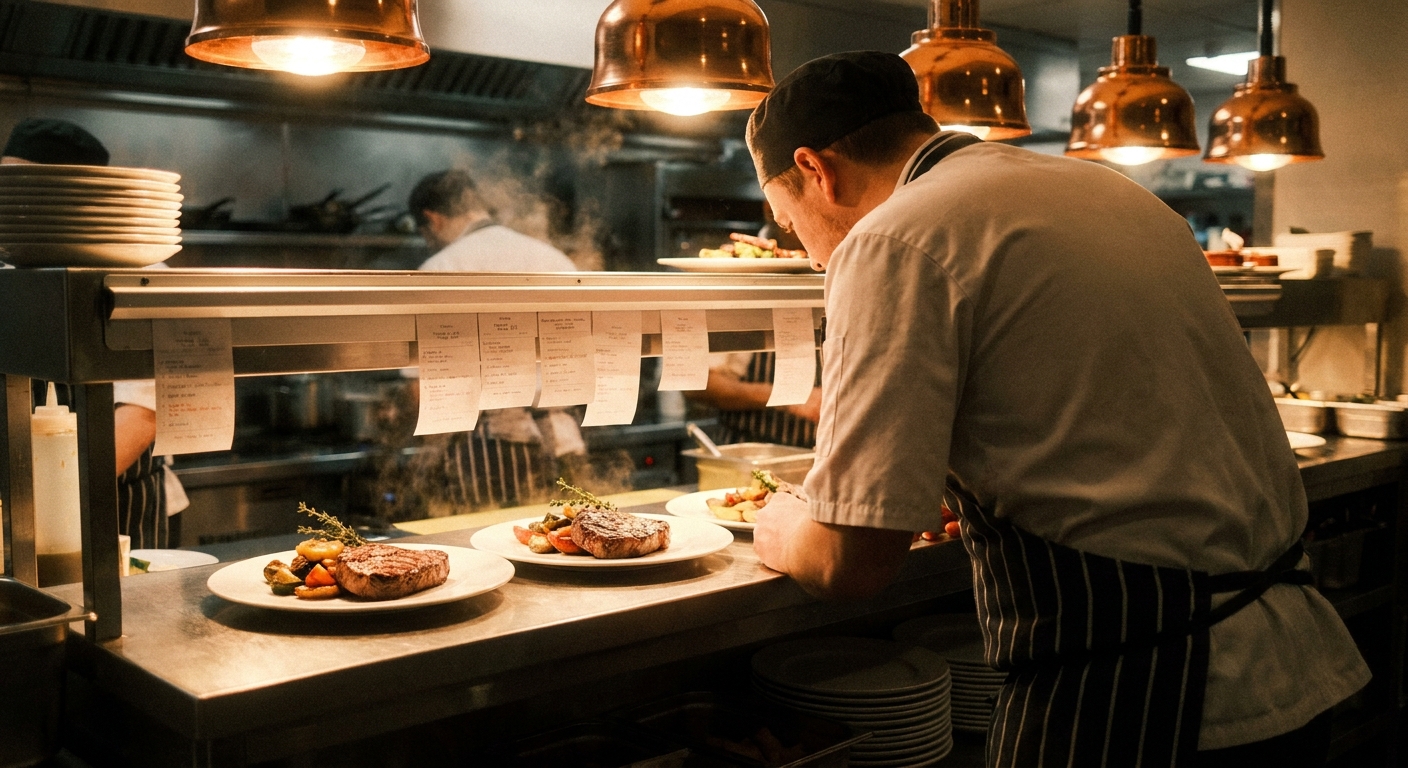
A New Haven Italian restaurant served calamari to a regular Saturday night customer who specifically mentioned a shellfish allergy when ordering. The kitchen used the same fryer oil that earlier in the evening had fried shrimp. The customer went into anaphylactic shock at the table; paramedics arrived in eight minutes. He survived — and then sued for $1.8 million in damages, citing negligent food handling and inadequate allergen protocols. The restaurant's General Liability policy carried $1M occurrence, but the foodborne illness sublimit capped payments at $150,000. The owner spent the next two years in court and the case settled for $940,000. The insurance covered $150,000 of it.
This is the General Liability exposure unique to restaurants. The lawsuits are not theoretical and the policies are not interchangeable. This is the first spoke in our CT Restaurant Insurance pillar guide, walking through how GL and Product Liability actually respond to the four most common restaurant claim types in Connecticut and where the limits and sublimits matter most.
The short answer: Restaurant General Liability covers third-party bodily injury and property damage at $1M occurrence / $2M aggregate standard. Product Liability (technically included within GL for food service) covers foodborne illness, allergens, and contamination. The trap: foodborne illness sublimits commonly cap payouts at $100K–$250K even when the policy aggregate is $2M. CT restaurants should negotiate the foodborne illness sublimit to match the full GL limit — typical extra premium is $400–$1,200/year and prevents catastrophic uncovered exposure.
At iConn Insurance Solutions we underwrite restaurant insurance for full-service restaurants, fast-casual concepts, food trucks, breweries with food programs, and catering operations across CT. The four restaurant GL claim types we see most often are slip-and-falls, foodborne illness, allergen exposures, and parking-lot/exterior injuries — and each one has a slightly different policy mechanic. This post breaks down each claim type, the CT case law context, and the sublimit traps that cause denials.
What does Restaurant General Liability actually cover?
Standard restaurant GL covers four categories of third-party loss. "Third-party" means the loss is to someone other than your business — a guest, a vendor, a delivery driver who slips in your lobby, the kid from the dance class next door who runs through your patio.
| Claim Category | Examples | Typical Limit |
|---|---|---|
| Bodily Injury — Premises | Slip-and-fall on wet floor, customer trips on torn carpet, child injured on host stand. | $1M occurrence / $2M aggregate |
| Bodily Injury — Product (Food) | Foodborne illness, allergen reaction, foreign object in food, choking hazard. | Often sublimited to $100K–$250K — watch this |
| Property Damage — Third Party | Wine spilled on customer's $4,000 handbag, restaurant fire damages adjacent tenant's space. | $1M occurrence |
| Personal & Advertising Injury | Server publicly humiliates a guest, social media post triggers defamation. | $1M occurrence |
The 4 most common CT restaurant GL claims
1. Slip-and-falls (most frequent)
Slip-and-fall accounts for roughly 40% of all CT restaurant GL claims. The standard claim profile: customer slips in entryway during snow/ice season, lobby vestibule mat is missing or wet, fall results in fractured wrist or back injury. Plaintiff demands $25,000–$180,000. CT case law gives some protection if the restaurant can document a snow/ice protocol — but the documentation has to exist. "We always salt the entrance" without a written log is functionally useless in front of a CT jury.
CT-specific: in winter months, restaurants in Hartford, New Haven, Bridgeport, Stamford, and Norwich face elevated slip-and-fall claim frequency. Document a snow/ice protocol — frequency, salt application log, mat placement — and you cut adjuster severity by 30–50%.
2. Foodborne illness (highest severity)
A norovirus outbreak from a single oyster or undercooked chicken can sicken 40 guests in one evening. CT Department of Public Health investigates; local press covers; lawsuits are filed. Average per-victim settlement in CT recent cases: $8,000–$60,000 depending on hospitalization. A single outbreak event can easily run $250,000–$1.2M in aggregate claim cost. The problem: the foodborne illness sublimit on most BOPs caps payouts at $100K–$250K, leaving the operator exposed.
3. Allergen exposures (rising fast)
Tree nut, peanut, shellfish, gluten, dairy, egg — these are the FDA's "Big 9" allergens, and CT public-health rules require restaurants to train staff on allergen handling. Cross-contamination in shared fryers, shared cutting boards, or unmarked menu items causes serious anaphylactic events. Settlement values are climbing as juries increasingly view allergen exposure as preventable negligence rather than accident. CT settlements for serious allergen events: $180,000–$1.4M.
4. Parking lot / exterior
If you own or control the parking lot, your premises liability extends to it. Trip-and-falls on broken pavement, dimly-lit entry, missing handrails, and patron-on-patron altercations after closing all generate GL claims. Lease language matters: confirm whether parking-lot premises liability is yours or the landlord's. Many CT restaurant operators discover at claim time that their lease pushed exterior premises liability onto the tenant.
The sublimit traps in restaurant GL policies
Restaurant BOPs from The Hartford, Liberty Mutual, Travelers, CNA, Society Insurance, and Westfield commonly contain sublimits that cap payouts below the main GL aggregate. Four to watch:
- Foodborne illness sublimit — typically $100K, $250K, or "matches GL aggregate." Negotiate to match.
- Assault & Battery sublimit/exclusion — common on policies for restaurants serving past 10 PM. Buy the buy-back.
- Liquor liability exclusion — universal in BOPs. Buy separately.
- Employee-related practices sublimit — often capped at $10K–$25K, while EPLI claims regularly run $80K+.
Mid-article note: If your restaurant policy is more than 12 months old, the foodborne illness sublimit may have quietly dropped at renewal without notification. Send your declarations page to iConn Insurance Solutions for a free sublimit audit.
What does restaurant GL cost in 2026?
| Restaurant Type | GL Limit | Annual GL Premium |
|---|---|---|
| QSR / fast-casual, no alcohol | $1M / $2M | $1,800–$3,400 |
| Full-service, beer & wine only | $1M / $2M | $3,400–$6,200 |
| Full bar restaurant w/ full liquor | $1M / $2M | $5,800–$11,500 |
| Brewery + food program | $1M / $2M | $7,200–$14,000 |
| Food truck | $1M / $2M | $1,600–$2,800 |
| Same restaurants stacked to $2M / $4M | $2M / $4M | +35–60% |
GL is bundled into the BOP (Business Owner Policy) for most restaurants — the premium above reflects the GL portion of the BOP and excludes property and equipment breakdown. Foodborne illness sublimit upgrade to match GL limit typically adds $400–$1,200/year and is the single highest-value coverage upgrade available.
Why an independent broker matters for restaurant GL
Restaurant BOPs vary significantly by carrier — foodborne illness sublimits range from $50K to "matches GL," assault and battery exclusions appear or do not, and employee-practices sublimits range widely. A captive agent shows you one carrier's form. An independent broker shops 4–6 markets and identifies the form whose exclusions and sublimits are best matched to your operation.
At iConn Insurance Solutions we are independent, multi-carrier, and CT-licensed. We compare restaurant BOPs across The Hartford, Liberty Mutual, Travelers, CNA, Society Insurance (a hospitality specialist), and Westfield, calling out the sublimit traps for your specific concept. Together with sister agency Insure Connecticut LLC, we cover hospitality concepts across 12 Northeast and Mid-Atlantic states.
Key Takeaways
- Restaurant GL covers slip-and-falls (40% of claims), foodborne illness (highest severity), allergen exposures (rising fast), and parking lot / exterior injuries.
- Foodborne illness sublimits in restaurant BOPs are commonly $100K–$250K — far below the $1M GL aggregate. Negotiate to match for $400–$1,200/year extra premium.
- Standard $1M/$2M GL premium for a CT full-service restaurant runs $3,400–$11,500/year depending on alcohol service.
- CT-specific: document snow/ice protocols. Without a written log, slip-and-fall settlements skew higher.
- Restaurant BOPs vary widely between carriers — independent brokerage matters more here than in most other commercial lines.
Frequently Asked Questions About Restaurant General Liability in CT
How much does General Liability cost for a small CT restaurant?
For a CT QSR or fast-casual with no alcohol, GL at $1M/$2M typically runs $1,800-$3,400 per year. A full-service restaurant with beer and wine pays $3,400-$6,200; a full-bar restaurant pays $5,800-$11,500. Stacking to $2M/$4M adds 35-60%. GL is usually bundled into the BOP rather than sold standalone.
Does my restaurant GL cover food poisoning lawsuits?
Maybe — but watch the foodborne illness sublimit. Most restaurant BOPs cap foodborne illness payouts at $100K-$250K regardless of the policy aggregate. A norovirus outbreak affecting 40 guests can easily generate $300K-$1M in aggregate settlements. Negotiate the sublimit to match your full GL limit.
What's the most common GL claim against CT restaurants?
Slip-and-fall accounts for roughly 40% of CT restaurant GL claims. Winter ice and water tracked in from the entryway are the dominant cause. Documenting a snow/ice protocol with frequency logs reduces both claim frequency and per-claim severity by 30-50%.
Are allergen reactions covered by restaurant GL?
Yes, under the product liability portion of GL — subject to the foodborne illness or product sublimit. CT settlements for serious allergen events run $180,000-$1.4M. Document allergen-handling protocols, train staff quarterly, and confirm your sublimit can absorb a worst-case allergen claim.
Does my GL cover my parking lot?
Depends on the lease. If you own or have exclusive control of the parking lot, premises liability extends to it. Many CT leases push exterior premises liability onto the tenant. Read your lease and confirm whose policy covers parking lot incidents — assumed coverage is the most common GL coverage gap we see in CT restaurant audits.
What limit should I carry on restaurant GL in CT?
$1M/$2M is the practical floor — required by most landlord leases and bank loans. Restaurants with high-volume bar revenue, late-night service, or any prior claim history should consider $2M/$4M with an umbrella stacking to $5M total. Premium difference between $1M/$2M and $2M/$4M is typically 35-60% on GL only.
Audit your restaurant GL policy
If your restaurant policy is more than 12 months old, it is time to audit the sublimits. Foodborne illness, assault and battery, and employee-practices sublimits change at renewal annually — often without notification. Send iConn Insurance Solutions your declarations page for a free 30-minute review. We will compare your current policy to 4 markets and identify any sublimits that have quietly dropped.
Restaurants outside CT but in the Northeast or Mid-Atlantic can work with sister agency Insure Connecticut LLC for the same multi-carrier audit across 12 states.
Related Content
AI Payment Fraud Incident Response: What to Do First
The first hour after a fraudulent wire can decide whether funds are frozen or lost. Follow this practical response guide for banks, insurers, evidence, law enforcement, and recovery.
Read post →
Hotel and Commercial Property Insurance: Where Should Renewal Savings Go?
A practical guide for hotel and commercial-property owners deciding whether to keep renewal savings, lower deductibles, increase limits or restore coverage.
Read post →AI Fraud Insurance Exclusions: Where Coverage Can Break
A large cyber limit can hide a small social engineering sublimit. Learn how voluntary-transfer language, verification conditions, and overlapping crime coverage can affect AI fraud claims.
Read post →
Connecticut Builders Risk Insurance: 2026 Buyer’s Guide
Connecticut builders risk buyers should update project values, timelines and controls. Learn what to prepare and compare for a 2026 placement.
Read post →