
Short-Term Production Insurance for CT Shoots: 3-Day vs. 30-Day vs. Annual
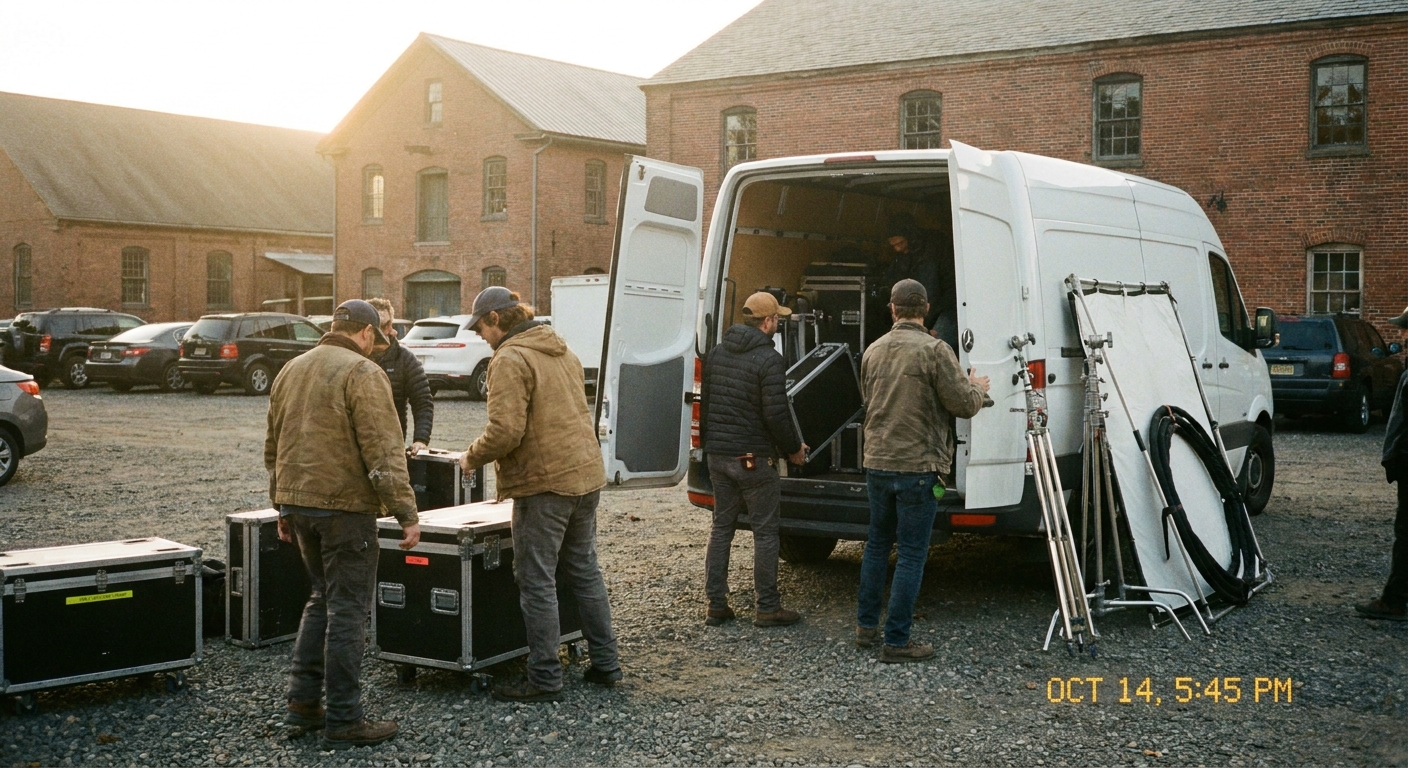
A Stamford-based commercial production company books a 3-day shoot for a national pharmaceutical brand. Talent on Day 1, location work in West Hartford on Day 2, studio interior on Day 3. The brand's legal team kicks back the certificate of insurance at 4:47 PM the Friday before the Monday call: "Your COI shows annual policy expires 8/31. We require coverage through 12/31 for product launch warranty period. Please re-issue." The production manager spent the weekend re-binding through three brokers and almost lost the shoot.
Short-term production insurance — sometimes called "shoot policies," "single-event" coverage, or "limited-period production policies" — sounds like a simple product. It is not. The right policy is genuinely cheap (a 3-day commercial can be insured for $1,800–$3,400) and the wrong policy can stop a $400,000 shoot at the door. This is the first spoke in our CT Film Production Insurance pillar guide — and it walks through the 3-day vs. 30-day vs. annual DICE decision in detail.
The short answer: Short-term production policies (3–30 days) cover one production with defined start/end dates. They cost $1,800–$3,400 for a 3-day commercial at $1M General Liability, and scale up to $8,500–$16,000 for a 14-day indie feature. Use them when you produce fewer than 3 projects per year. If you produce 3+ per year, an annual DICE policy is materially cheaper per shoot — typically $9,500–$22,000 for the full year regardless of project count.
At iConn Insurance Solutions we bind a high volume of short-term production policies for CT commercial producers, indie filmmakers, music video shops, and corporate branded-content shoots. The mistakes we see most often are not the obvious ones — they are buried in the certificate language, the additional-insured wording, and the duration math. This post walks through the policy mechanics, what each duration tier actually costs, and how the DECD tax credit interacts with short-term vs. annual structures.
What is short-term production insurance?
A short-term production policy is a package policy with a defined start date and end date — typically 3 to 30 days — covering one specific production. The standard package mirrors the full 7-piece production coverage set, just compressed to the shoot window:
- General Liability ($1M occurrence / $2M aggregate standard)
- Hired & Non-Owned Auto ($1M CSL)
- Equipment Coverage (matching rented/owned gear value)
- Cast Insurance (essentials, accident-only)
- Third-Party Property Damage (location coverage)
- Workers' Comp added as a separate placement (CT statutory)
- E&O typically deferred to a later "sales" placement
The package includes the option to extend by a few days for prep and wrap if needed, but the carrier prices on the dates you bind. Underestimating the wrap window is one of the four most common ways producers end up with an uncovered loss — the camera truck rolls back from final location at 2 AM on the policy-end date and the dolly arm jams the lift gate at the rental return the next morning.
When does short-term make sense vs. annual?
| Your Production Frequency | Recommended Structure | Why |
|---|---|---|
| 1 project per year | Short-term, project-specific | Pay-per-shoot is materially cheaper than carrying annual. |
| 2 projects per year | Two short-term policies (still cheaper) | $3,400 × 2 = $6,800 < $9,500 minimum annual. |
| 3 projects per year | Tipping point — get both quoted | Annual usually wins; not always. |
| 4+ projects per year | Annual DICE | Per-shoot cost drops to $1,500–$3,500 effective. |
| Documentary / always-shooting | Annual DICE with broad territory | Constant exposure demands constant coverage. |
The other variable: certificate-issuing speed. Annual policies let your producer pull certificates in 30 minutes for new locations as the production schedule shifts. Short-term policies require re-binding through the carrier and adding additional insureds with each new request, which can take 4–24 hours and bottlenecks fast production calendars.
What does short-term production insurance cost in CT?
| Production Type | Shoot Length | Total Premium |
|---|---|---|
| 1-day branded content / corporate | 1 day + 2 days prep/wrap | $1,800–$2,400 |
| National commercial spot | 3 days + 3 days prep/wrap | $2,600–$3,400 |
| Multi-location commercial campaign | 5 days + 4 days prep/wrap | $3,800–$7,500 |
| Music video / short film | 2–4 days + 3 days prep/wrap | $2,200–$4,200 |
| Indie feature (no stunts) | 14 days + 7 days prep/wrap | $8,500–$16,000 |
| Indie feature (minor stunts/vehicle action) | 30 days + 10 days prep/wrap | $18,000–$38,000 |
The main pricing inputs: GL limit (most CT productions write at $1M/$2M but some location agreements require $2M/$5M), equipment value (insurance pays on Schedule, so accurate inventory matters), and crew payroll (drives the Workers' Comp piece).
Mid-article note: If you have a CT production starting within 30 days and are still figuring out the insurance, request a short-term production quote from iConn Insurance Solutions — we turn certificates in 24 hours and can structure the policy to satisfy DECD tax-credit allocation.
Which carriers write CT short-term production?
Short-term production is a specialty placement — not every commercial insurer writes it. The active CT markets in 2026:
- Tokio Marine HCC Entertainment — strong on commercials and indie features.
- Chubb — broad form, but minimum premiums often disqualify smaller shoots.
- Hiscox — competitive for small productions and music videos.
- Amwins (wholesale) — accesses several Lloyd's-backed entertainment MGAs.
- F.H. Brown — entertainment specialist with fast turn times.
- Travelers — annual DICE strong, less competitive on one-offs.
Form differences across these carriers are substantial. Tokio Marine's form covers props and wardrobe broader than Hiscox's; Chubb's third-party property damage extends to deeper sublimits than Amwins-placed Lloyd's products; Hiscox's E&O carve-out is narrower than the rest. An independent broker comparing forms matters more here than in almost any other line of coverage.
The 4 most common short-term production mistakes
1. Underestimating the wrap window
The policy expires at midnight on the listed end date. Camera trucks rolling back from location at 3 AM, equipment returns Monday morning after a Friday wrap, talent doing reshoots on the originally-budgeted dark day — all of these need to be inside the policy window. Add a 3–7 day wrap buffer when binding.
2. Missing additional insureds
Every location, every equipment house, and every brand client typically needs to be listed as Additional Insured on the certificate. Standard practice in CT productions: collect AI requirements from every vendor 7+ days before shoot start. Adding AIs after the fact is possible but slow.
3. Wrong GL limits for high-value locations
Some CT locations — high-end residential, certain Mark Twain House-adjacent sites, certain Stamford corporate campuses — require $2M/$5M GL minimums. A $1M/$2M policy gets rejected the day before the shoot. Confirm location GL requirements before binding.
4. Buying without DECD tax-credit allocation
If your CT production qualifies for the DECD film tax credit (10–30%), your insurance premium can count toward your CT qualified spend — but only if the policy is structured to clearly allocate CT shoot days. Buy through a CT-licensed broker who knows the allocation language, or risk leaving 10–30% of premium on the table at audit.
Why an independent broker matters for short-term production
Six markets, four primary form variations, and a 24-hour turn requirement on certificates — that is the short-term production placement reality. A captive agent shows you one product. An independent broker compares 4–6 forms and binds the one that fits your specific location agreements, equipment list, and tax-credit allocation.
At iConn Insurance Solutions we are independent, CT-licensed, and entertainment-focused. We hold appointments with the specialty MGAs that write production business — Tokio Marine, Chubb, Hiscox, Amwins, F.H. Brown — and we turn certificates in 24 hours. Together with sister agency Insure Connecticut LLC, we cover Northeast and Mid-Atlantic productions across 12 states with the same independent multi-carrier access.
Key Takeaways
- Short-term production policies (3–30 days) cost $1,800–$38,000 total premium depending on shoot length, stunts, and equipment value.
- Use short-term for 1–2 projects per year. At 3+ projects/year, annual DICE is materially cheaper per shoot.
- Add a 3–7 day wrap buffer when binding — policies expire at midnight on the listed end date.
- Confirm location-specific GL minimums before binding. Some CT locations require $2M/$5M, not the $1M/$2M default.
- Purchase through a CT-licensed broker to preserve DECD tax-credit allocation on the premium — saves 10–30% at audit.
Frequently Asked Questions About Short-Term Production Insurance
How quickly can I get a short-term production certificate?
Most CT entertainment brokers turn certificates in 24 hours from binding. Same-day certificates are possible if the underwriter has full application information and the production does not involve stunts, vehicle action, or unusual locations. Plan for 7+ days lead time on first-time productions and 24 hours on certificate amendments for new locations.
What's the minimum policy length I can buy?
3 days is the typical minimum for full commercial production coverage. Single-day shoots often get bundled into a 3-day policy because the underwriting cost on a 1-day policy is not materially different. Some MGAs offer "single-event" policies for sub-3-day shoots but with thinner coverage.
Can I add days to a short-term policy mid-shoot?
Yes, but at a premium. Mid-shoot extensions typically run 1.5-2x the per-day rate of the original policy because they signal scope creep to the underwriter. Better practice: bind with a 3-7 day wrap buffer up front. The buffer days are cheap insurance against schedule slip.
Do I need separate Workers' Comp on a short-term production?
Yes if you have any W-2 employees on set — CT statute mandates it for any W-2 employee regardless of duration. The short-term policy package typically excludes Workers' Comp and you buy it as a separate placement. If you use only 1099 contractors and freelancers, confirm classification carefully — misclassifying employees as contractors is a CT Department of Labor enforcement priority.
What happens if my shoot goes over the policy end date?
If a loss occurs after the policy expires, it is not covered — even if the cause originated during the shoot window. The fix is binding with a wrap buffer or extending the policy mid-shoot if you see the schedule slipping. Carriers do not retroactively cover gaps after the fact.
Does a short-term production policy count toward the CT film tax credit?
Yes if purchased through a CT-licensed broker and properly allocated to CT shoot days. The DECD tax credit treats insurance premium as a qualified expense at 10-30% reimbursement depending on production category. Buying through an out-of-state broker typically forfeits the allocation, leaving 10-30% of premium uncredited at audit.
Need a short-term production policy for your CT shoot?
If you have a CT production starting in the next 30 days, send us the shoot dates, equipment list, and locations. We will turn a quote in 24 hours and bind 48 hours from acceptance. Request a CT short-term production quote from iConn Insurance Solutions.
For productions outside CT but in the Northeast or Mid-Atlantic, Insure Connecticut LLC covers the same 12-state footprint with the same independent multi-carrier markets.
Related Content
AI Payment Fraud Incident Response: What to Do First
The first hour after a fraudulent wire can decide whether funds are frozen or lost. Follow this practical response guide for banks, insurers, evidence, law enforcement, and recovery.
Read post →
Hotel and Commercial Property Insurance: Where Should Renewal Savings Go?
A practical guide for hotel and commercial-property owners deciding whether to keep renewal savings, lower deductibles, increase limits or restore coverage.
Read post →AI Fraud Insurance Exclusions: Where Coverage Can Break
A large cyber limit can hide a small social engineering sublimit. Learn how voluntary-transfer language, verification conditions, and overlapping crime coverage can affect AI fraud claims.
Read post →
Connecticut Builders Risk Insurance: 2026 Buyer’s Guide
Connecticut builders risk buyers should update project values, timelines and controls. Learn what to prepare and compare for a 2026 placement.
Read post →